Books by grade · Printed book

Grade 1 · Social Studies

24 lessons from the family edition’s 36 weeks, with 23 standards targets.

One of your Grade 1 books
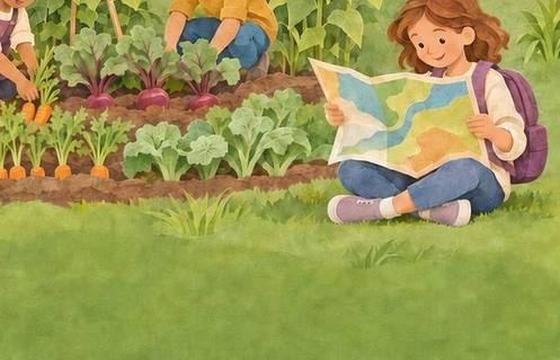
A girl sits in the grass and reads a map.

Lessons

Each lesson shows its standards. The buttons open the history reading on that week’s page.

Unit 1 · Mapping land and water

  1. Lesson 1 · One place with many locations

    Book p. 14–18

    Family week 1 · Our place in the world

    Standards

    • 1.2I can distinguish exact and relative locations.

    History reading for Lesson 1

  2. Lesson 2 · Looking at the whole world

    Book p. 19–22

    Family week 2 · Maps and models of Earth

    Standards

    • 1.2.1I can locate community, California, United States, continents and oceans.
    • 1.2.2I can compare information from a three dimensional model and a picture.
    • 1.2.3I can make a map with directions and symbols.

    History reading for Lesson 2

  3. Lesson 3 · Planning for the place

    Book p. 23–26

    Family week 5 · Weather and everyday choices

    Standards

    • 1.2.4I can connect place, weather and environment to food, clothes, homes, transport and recreation.

    History reading for Lesson 3

  4. Lesson 4 · Maps help people solve problems

    Book p. 27–30

    Family week 6 · Keep the model path in place

    Standards

    • 1.2I can distinguish exact and relative locations.
    • 1.2.3I can make a map with directions and symbols.

    History reading for Lesson 4

Unit 2 · Families and living things

  1. Lesson 5 · Notice, ask and include

    Book p. 34–37

    Family week 9 · Many people, one community

    Standards

    • 1.5I can describe community languages, buildings, transport, foods and varied backgrounds.
    • 1.5.1I can explain shared needs, differences, benefits of diversity and ways to resolve misunderstandings.

    History reading for Lesson 5

  2. Lesson 6 · Living knowledge and lasting work

    Book p. 38–41

    Family week 10 · Contributions that continue

    Standards

    • 1.5.2I can give specific Indigenous and immigrant contributions to California and the United States.

    History reading for Lesson 6

  3. Lesson 7 · Learning what a practice means

    Book p. 42–45

    Family week 11 · Traditions and shared places

    Standards

    • 1.5.3I can compare beliefs, customs, ceremonies, traditions and social practices respectfully.

    History reading for Lesson 7

  4. Lesson 8 · A map can hold a family story

    Book p. 46–49

    Family week 12 · A family journey exhibit

    Standards

    • 1.5I can describe community languages, buildings, transport, foods and varied backgrounds.

    History reading for Lesson 8

Unit 3 · Making and exchanging

  1. Lesson 9 · A basket of choices

    Book p. 52–55

    Family week 13 · What we need and use

    Standards

    • 1.6I can use examples of supply, demand, goods, services, wants and needs.

    History reading for Lesson 9

  2. Lesson 10 · More than a price tag

    Book p. 56–60

    Family week 14 · Buyers, makers and helpers

    Standards

    • 1.6.1I can explain money used to buy goods and services.
    • 1.6.2I can connect making, transporting and marketing jobs and the importance of work at home.

    History reading for Lesson 10

  3. Lesson 11 · Along the towpath

    Book p. 61–65

    Family week 17 · Getting goods from place to place

    Standards

    • 1.4.2I can describe and compare past forms of transport.
    • 1.6.2I can connect making, transporting and marketing jobs and the importance of work at home.

    History reading for Lesson 11

  4. Lesson 12 · A market tells a story

    Book p. 66–70

    Family week 18 · Make a small market exhibit

    Standards

    • 1.6I can use examples of supply, demand, goods, services, wants and needs.

    History reading for Lesson 12

Unit 4 · Signals and shared decisions

  1. Lesson 13 · A place for everyone

    Book p. 74–77

    Family week 19 · Fair play and shared responsibilities

    Standards

    • 1.1I can connect citizenship rights and responsibilities.
    • 1.1.2I can explain the Golden Rule and demonstrate fairness, sportsmanship and respect for peers.

    History reading for Lesson 13

  2. Lesson 14 · Two ways to decide

    Book p. 78–81

    Family week 20 · Voting and choosing representatives

    Standards

    • 1.1.1I can distinguish direct and representative rule making with examples.

    History reading for Lesson 14

  3. Lesson 15 · Pictures, places and promises

    Book p. 82–85

    Family week 23 · Symbols and public places

    Standards

    • 1.3.3I can explain selected American symbols, landmarks and founding documents.

    History reading for Lesson 15

  4. Lesson 16 · More than a day off

    Book p. 86–89

    Family week 24 · Days to remember

    Standards

    • 1.3I can explain the meaning of United States symbols, icons and traditions.
    • 1.3.1I can recite the Pledge and sing patriotic songs, or document a teacher agreed alternative.
    • 1.3.2I can explain the significance of several national holidays.

    History reading for Lesson 16

Unit 5 · Change and care

  1. Lesson 17 · Windows into earlier places

    Book p. 92–95

    Family week 25 · A place has a past

    Standards

    • 1.4I can compare life across past places and identify change and continuity.
    • 1.4.1I can compare schools and communities in the past.

    History reading for Lesson 17

  2. Lesson 18 · Work, play and celebration

    Book p. 96–99

    Family week 26 · Ordinary days leave clues

    Standards

    • 1.4.3I can compare past jobs, clothing, manners, stories, games and festivals.

    History reading for Lesson 18

  3. Lesson 19 · Water does not stop at a line

    Book p. 100–103

    Family week 30 · Keep soil in its place

    Standards

    • 1.1I can connect citizenship rights and responsibilities.

    History reading for Lesson 19

Unit 6 · Our evidence museum

  1. Lesson 20 · Routes, names and neighbors

    Book p. 106–110

    Family week 31 · A map tells a story

    Standards

    • 1.2.1I can locate community, California, United States, continents and oceans.
    • 1.2.2I can compare information from a three dimensional model and a picture.
    • 1.2I can distinguish exact and relative locations.

    History reading for Lesson 20

  2. Lesson 21 · A spoon’s unfinished story

    Book p. 111–114

    Family week 32 · The objects in our exhibit

    Standards

    • 1.4I can compare life across past places and identify change and continuity.
    • 1.6.2I can connect making, transporting and marketing jobs and the importance of work at home.

    History reading for Lesson 21

  3. Lesson 22 · Culture keeps moving

    Book p. 115–118

    Family week 34 · Our living museum

    Standards

    • 1.5I can describe community languages, buildings, transport, foods and varied backgrounds.
    • 1.5.1I can explain shared needs, differences, benefits of diversity and ways to resolve misunderstandings.
    • 1.5.2I can give specific Indigenous and immigrant contributions to California and the United States.

    History reading for Lesson 22

  4. Lesson 23 · Two ways to make a rule

    Book p. 119–122

    Family week 35 · Build something useful

    Standards

    • 1.1.1I can distinguish direct and representative rule making with examples.

    History reading for Lesson 23

  5. Lesson 24 · The label that needed a question mark

    Book p. 123–126

    Family week 36 · Open the evidence museum

    Standards

    • 1.2.3I can make a map with directions and symbols.
    • 1.4I can compare life across past places and identify change and continuity.

    History reading for Lesson 24

Grade 1 · Social Studies · Our Shared World

Standards checklist

I Can wording is paraphrased from the CPA I Can checklist. Mark each target from the child’s actual work. A completed page is not automatic mastery.

Citizenship

  • 1.1 I can connect citizenship rights and responsibilities.

    LessonsLesson 13Lesson 19

  • 1.1.1 I can distinguish direct and representative rule making with examples.

    LessonsLesson 14Lesson 23

  • 1.1.2 I can explain the Golden Rule and demonstrate fairness, sportsmanship and respect for peers.

    LessonsLesson 13

Locations

  • 1.2 I can distinguish exact and relative locations.

    LessonsLesson 1Lesson 4Lesson 20

  • 1.2.1 I can locate community, California, United States, continents and oceans.

    LessonsLesson 2Lesson 20

  • 1.2.2 I can compare information from a three dimensional model and a picture.

    LessonsLesson 2Lesson 20

  • 1.2.3 I can make a map with directions and symbols.

    LessonsLesson 2Lesson 4Lesson 24

  • 1.2.4 I can connect place, weather and environment to food, clothes, homes, transport and recreation.

    LessonsLesson 3

Symbols and Icons

  • 1.3 I can explain the meaning of United States symbols, icons and traditions.

    LessonsLesson 16

  • 1.3.1 I can recite the Pledge and sing patriotic songs, or document a teacher agreed alternative.

    LessonsLesson 16

  • 1.3.2 I can explain the significance of several national holidays.

    LessonsLesson 16

  • 1.3.3 I can explain selected American symbols, landmarks and founding documents.

    LessonsLesson 15

History

  • 1.4 I can compare life across past places and identify change and continuity.

    LessonsLesson 17Lesson 21Lesson 24

  • 1.4.1 I can compare schools and communities in the past.

    LessonsLesson 17

  • 1.4.2 I can describe and compare past forms of transport.

    LessonsLesson 11

  • 1.4.3 I can compare past jobs, clothing, manners, stories, games and festivals.

    LessonsLesson 18

People Who Live in America

  • 1.5 I can describe community languages, buildings, transport, foods and varied backgrounds.

    LessonsLesson 5Lesson 8Lesson 22

  • 1.5.1 I can explain shared needs, differences, benefits of diversity and ways to resolve misunderstandings.

    LessonsLesson 5Lesson 22

  • 1.5.2 I can give specific Indigenous and immigrant contributions to California and the United States.

    LessonsLesson 6Lesson 22

  • 1.5.3 I can compare beliefs, customs, ceremonies, traditions and social practices respectfully.

    LessonsLesson 7

Economics

  • 1.6 I can use examples of supply, demand, goods, services, wants and needs.

    LessonsLesson 9Lesson 12

  • 1.6.1 I can explain money used to buy goods and services.

    LessonsLesson 10

  • 1.6.2 I can connect making, transporting and marketing jobs and the importance of work at home.

    LessonsLesson 10Lesson 11Lesson 21

Broad category targets may need evidence from several lessons.

Independent homeschool resource. Not reviewed or approved by Cabrillo Point Academy. The school checklist and your teacher remain the authority for reporting.

Other books

Grade 1 · ScienceGrade 2 · Social StudiesGrade 2 · Science