Story time optional

Picture books you can read together on this site.

From the library

Free with a library card. Availability varies.

Come On, Rain!by Karen HesseBorrow in LibbyBorrow in HooplaThe Big Rockby Bruce HiscockBorrow in Libby

Standards this week

The same codes and I Can statements as the printed books.

Books by grade

Grade 1

  • 1.2.4I can connect place, weather and environment to food, clothes, homes, transport and recreation.

Science

Not in the Grade 1 Science book this week.

Grade 2

Social Studies

Not in the Grade 2 Social Studies book this week.

  • 2-ESS1-1I can compare rapid and slow events that change Earth.
Grade 1 Social Studies book, p. 23–24
In your book

Session 1, Read and notice: Planning for the place

Week 5 big question: How can a place change our plans?

Start with a story (optional) The Red Raincoat — Read it hereManu waits all week for rain so he can wear his new red raincoat.

A place is not the only reason for our choices.

You reach for a raincoat, but someone else needs a sun hat. Imagine three families getting ready for their day. One lives by a rainy coast, and another lives near snowy mountains. The third lives in a hot, dry valley. Each family makes plans to fit its environment, or the place all around it. But place alone cannot tell us what each family will choose. What they like to do and their family customs matter, too. So do money, nearby services, and what their bodies need.

Weather can change food, clothes, and homes.

What might these families eat, wear, or choose for a home? Gardens need the right warmth and water for food to grow. Shops also bring food from far away, so families have more choices. Raincoats keep rain off, while warm layers help on cold days. A home may use insulation to keep heat in or out. Its shade and roof can help with local weather, too. Still, no house design fits every family or every place.

People change their plans to fit the place and day.

Now suppose snow closes the road a family planned to take. To stay safe, they must adapt, or change, their trip. The weather can also change recreation, or what people do for play. During dangerous heat, indoor play might take the place of hiking. Planners ask what is here and what each person needs. Then they choose what to do. People in one region do not all live alike. Each family has choices to make.

Look and think

Show what you notice

  1. Heavy rain is coming. How might it change clothes? Travel? Play?
  2. Why can’t a place’s weather tell us everything about the food people eat?

Answer your waypointact it outtell or dictatewrite

Grade 2 Science book, p. 25–27
In your book

Session 2, Investigate: Earth changes at different speeds

Some Earth changes are fast, and some are slow.

Could a hill change while you blink, or take many years? An earthquake can shake the ground in just a few seconds. A rockfall sends rocks tumbling downhill at once. Yet water can wear rock away bit by bit over years. When rock or soil moves from one place to another, we call it erosion. Its timescale is the time the change takes, which can vary. Gentle rains may carry a little soil away each time. One strong storm can sweep away a lot. Our tray model shows changes. It cannot show how long a real hill took to form. A hill can hold clues to changes too slow to watch.

Set up the test

Gather tray · small mound of damp sand or soil · spoon · dropper or teaspoon · water · paper

Safety An adult handles soil and supervises the tray. Wash hands afterward. Do not imitate landslides outside or approach unstable slopes; use only the small model.

  1. Make a small damp mound in a tray. Draw it. Guess what a few spoonfuls of water will do.
  2. Add one small spoonful at a time, in the same place. Draw the change after six.Adult: Pause after each spoonful so the child can point to the first change.
  3. Reshape the hill. Watch an adult tip part of it. How is this change different?Adult: Use a spoon to tip one side so some soil falls at once.
  4. Name a fast and a slow real change. Why can’t our short model time them?

Try the model

A model to try after your real test.

Getting the model ready…

Grade 1 Social Studies book, p. 25Grade 2 Science book, p. 28

Session 3: Record and make — Five choices for one day

Five choices for one day

Make a plan card for one made-up place. Show choices people there could make.

  1. Pick a rainy coast, a snowy mountain, or a hot, dry valley. Make five boxes: food, clothing, housing, travel, and recreation (fun).
  2. In each box, draw one choice. Tell how the place or weather shapes it.
  3. Now heavy rain closes a road. Change your plan so it stays safe.

Connect the ideas. A planner looks at today’s weather. Why look at what the place was like for many years, too?

Look closely

Tap a picture to make it big. Zoom in and find the clues.

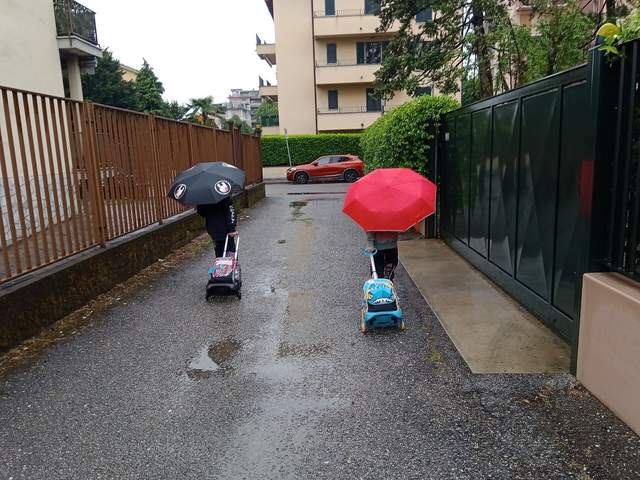
PhotographDressed for a rainy daySWT666 · CC BY 4.0

Watch and wonder

Field trip

Visit with a grown-up. These open other websites in a new tab.

Grade 1 Social Studies book, p. 26Grade 2 Science book, p. 29

My evidence page: A plan with reasons

Show five choices for your place. Link each choice to a place or weather clue. Then show one change to your plan when the weather changes.

  • 1My five choices and reasons
  • 2What changed and my new plan

3Choose and explain · Checkpoint game

Listen, then choose. Finish the game to earn this week’s stamp.

The game needs JavaScript turned on.

For the adult · what each grade shows

Grade 1

Show one choice each for food, clothing, housing, travel, and recreation, and name a fast and a slow Earth change.

Grade 2

Explain how place and weather shape all five choices, without saying every family does the same.

Showing the Grade 1 line for your book.

Showing the Grade 2 line for your book.

Take a photo of the evidence page or the test. Add your child’s own words. It stays on this device.

Add to my portfolio

Parent corner

How to run this week, in a few minutes.

At a glance

Time

From the workbook: Read and notice about 20 min · Investigate 20–30 min, plus short checks · Record and make 20–30 min.

Core

Show how place and weather shape five everyday choices, and compare a fast and a slow Earth change.

Materials
  • tray
  • small mound of damp sand or soil
  • spoon
  • dropper or teaspoon
  • water
  • paper
Safety

An adult handles soil and supervises the tray. Wash hands afterward. Do not imitate landslides outside or approach unstable slopes; use only the small model.

Short week

Read together, then do Investigate steps 1–3 and the evidence page.

Next week

Ask which observations would require photographs over years rather than watching for one minute. Keep weather safety decisions with adults.

Library books

  • Come On, Rain! by Karen Hesse. A hot neighborhood waits for and enjoys the rain, a story of weather shaping daily life.
  • The Big Rock by Bruce Hiscock. Traces one boulder over a very long time as Earth slowly changes.
Answer key (for grown-ups)

Talk together

  1. Heavy rain is coming. How might it change clothes? Travel? Play?
    Possible answers include a raincoat, postponing an unsafe trip, and choosing indoor play. Accept different practical plans with clear reasons; avoid directing children into actual hazardous weather.
  2. Why can’t a place’s weather tell us everything about the food people eat?
    Foods also depend on transport, culture, availability, resources, and preferences. A local growing condition influences food without determining everything a family eats.

What to expect in the investigation

Gentle additions may create channels or move small grains; the tipped section may fall abruptly. Soil type and moisture alter results. The model illustrates different rates but does not reproduce geological time or prove all erosion is slow. A rockfall can be sudden; mountains rise over very long times. A tray model makes small changes easy to see, but it runs only a short time and cannot show how long a real landscape took to form.

Checkpoint question

Choice B. If the child chooses one fixed speed, revisit the small repeated changes and the sudden movement.

Kindergarten this weekSocial Studies: Map of my roomScience: Dress and plan