Story time optional

Picture books you can read together on this site.

From the library

Free with a library card. Availability varies.

Market Day: A Story Told with Folk Artby Lois EhlertBorrow in LibbyShadows and Reflectionsby Tana HobanBorrow in Libby

Standards this week

The same codes and I Can statements as the printed books.

Books by grade

Grade 1

  • 1.6I can use examples of supply, demand, goods, services, wants and needs.
  • 1-PS4-3I can compare materials placed in a light beam.

Grade 2

  • 2.4I can use economic reasoning and explain the learner’s role in the economy.
  • 2.4.1I can trace food production and the roles of farmers, processors, distributors, weather, land and water.
  • 2.4.2I can distinguish consumer buyers from producer sellers.
  • 2.4.3I can explain how limited resources affect production and consumption.

Science

Not in the Grade 2 Science book this week.

Grade 1 Social Studies book, p. 66–67Grade 2 Social Studies book, p. 71–72
In your book

Session 1, Read and notice: A market tells a story

Week 18 big question: Can a market show both our choices and our evidence?

Start with a story (optional) Who Made the Tomato Chutney? — Read it hereTara and Ravi carry the market shopping home, and something starts to drip.

A market is where people buy and sell.

You have two tokens in your hand. What will you buy? Picture a paper market, where buyers and sellers trade goods or services. One stall offers apples, another has cloths, and a third offers to deliver goods. Here, people trade paper pictures, so no real food changes hands. Other markets might be shops, stalls or places online.

Each thing we buy links lots of people who work.

Look closely at an apple and think about its trip. First, a farmer needed land, water and weather to grow it. Other people may then process the food or move it along. A cloth also needed materials, makers and workers to carry it. If someone brings your goods, that person spends time doing the work. People who make or provide things are producers, while those using them are consumers. You can be both, making a cloth and eating an apple.

With just two tokens, you must choose what to give up.

Now five buyers arrive, but only three apples are for sale. Each costs one token, and each buyer can pay for one. Supply does not meet demand at that price. So some buyers must wait or choose something else. With your two tokens, you could buy two apples or one with delivery. What you give up when you choose is your trade-off. Which would you pick, and what would you leave behind?

Look and think

Show what you notice

  1. How can one person be both a producer and a consumer?
  2. The model market has two limits. What are they? How could they change what people choose?

Answer your waypointact it outtell or dictatewrite

Grade 1 Science book, p. 46–49
In your book

Session 2, Investigate: What happens in the beam?

Shine a flashlight at a window, then at a book. Why does light pass through one but not the other? Different materials change what happens to a beam. A transparent material, like clear plastic, lets light pass through. A translucent one, like wax paper, lets some light through but spreads it. Things behind it look blurry. An opaque one, like cardboard, blocks the beam and makes a shadow. A shiny surface, like a mirror or smooth foil, can reflect light. It can bounce light to a new place. Color does not tell you what a material will do. A thick piece may act differently from a thin one. That is why we test one material at a time.

Set up the test
Set up the test

Gather flashlight · clear plastic · wax paper · cardboard · smooth foil on cardboard · white paper screen · paper tokens and market pictures

Safety No lasers, sunlight beams, or light aimed into eyes. Adults prepare smooth foil without sharp edges; keep paths lit.

  1. Set the flashlight on a steady stack, facing the screen. Look at the beam with no sample.
  2. Predict what each material will do. Mark your guesses on your evidence page.
  3. Hold each sample in the same spot. Watch the screen.Adult: Use thin sheets; a thick sheet may act differently. Slowly tilt the foil and look for a bright spot.
  4. Record what really happened. Repeat any test that was unclear.

Try the model

A model to try after your real test.

Getting the model ready…

Grade 1 Social Studies book, p. 68 and 70Grade 1 Science book, p. 50Grade 2 Social Studies book, p. 73 and 76

Session 3: Record and make — Open the paper market

Open the paper market

Build a pretend market on a table. No one really buys or sells.

  1. Make two stalls. Label a need, a want, a good and a service. Act out three apples and five buyers.
  2. Give each shopper two tokens. Choose, and tell your trade-off. Add a food-route card.Adult: The card names the farmer, processor and distributor, plus land, water and weather.
  3. Make a model window or shade from a material you tested. Tell why its light result fits.Adult: Add this month’s real daylight check to the daylight record.

Connect the ideas. What should a market sign tell a shopper about a good? What should it say about how the good did in tests?

Look closely

Tap a picture to make it big. Zoom in and find the clues.

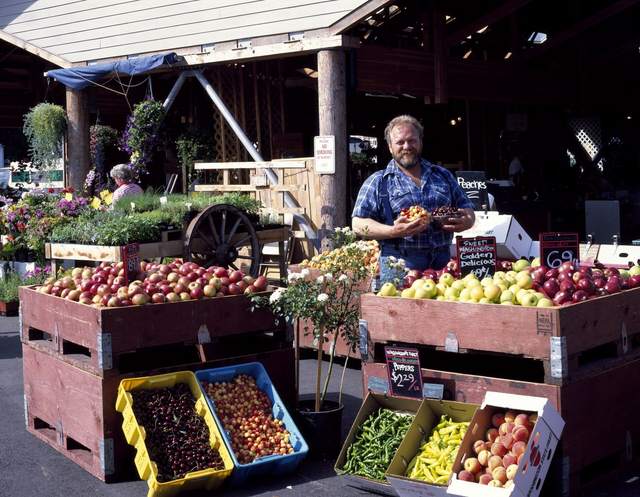
PhotographOlympia Farmers' Market, WashingtonCarol M. Highsmith · Public domain
PhotographA frosted glass door, London, 2020Acabashi · CC BY-SA 4.0
PhotographTree shadows on snow, Sweden, 2021W.carter · CC BY-SA 4.0

Watch and wonder

Field trip

Visit with a grown-up. These open other websites in a new tab.

Grade 1 Social Studies book, p. 69Grade 1 Science book, p. 51Grade 2 Social Studies book, p. 74

My evidence page: My evidence

1Choose and explain · Checkpoint game

Listen, then choose. Finish the game to earn this week’s stamp.

The game needs JavaScript turned on.

For the adult · what each grade shows

Grade 1

Show a need, a want, a good, a service, supply and demand, and one useful difference in your light test.

Grade 2

Explain how a smaller apple supply changes what sellers can offer and what buyers can choose.

Showing the Grade 1 line for your book.

Showing the Grade 2 line for your book.

Take a photo of the evidence page or the test. Add your child’s own words. It stays on this device.

Add to my portfolio

Parent corner

How to run this week, in a few minutes.

At a glance

Time

From the workbook: Read and notice about 20 min · Investigate 20–30 min, plus short checks · Record and make 20–30 min.

Core

Run the paper market with a trade-off, and test all four materials in a light beam.

Materials
  • flashlight
  • clear plastic
  • wax paper
  • cardboard
  • smooth foil on cardboard
  • white paper screen
  • paper tokens and market pictures
Safety

No lasers, sunlight beams, or light aimed into eyes. Adults prepare smooth foil without sharp edges; keep paths lit.

Short week

Read together, then do the light test, Make steps 1–2 and the evidence page. Save the market role-play and food-route card.

Next week

Retrieve a Great Lake and an ocean on the North America map, then check the reference. Log daylight honestly; do not infer a seasonal trend from one date.

Library books

  • Market Day: A Story Told with Folk Art by Lois Ehlert. A family goes to market and the book uses folk art objects to tell the story.
  • Shadows and Reflections by Tana Hoban. Wordless photographs show how objects block or bounce light.
Answer key (for grown-ups)

Talk together

  1. How can one person be both a producer and a consumer?
    Someone may produce a cloth and later consume an apple. Buying and using are related but not identical roles.
  2. The model market has two limits. What are they? How could they change what people choose?
    There are only three apples for five able buyers at the price, and each shopper has two tokens. Either limit can change available choices.

What to expect in the investigation

Clear plastic transmits much light; wax paper diffuses transmitted light; cardboard blocks it. Smooth foil redirects light, often less neatly than a mirror. Thickness, wrinkles, and ambient light affect observations. Do not demand an ideal beam.

Checkpoint question

Blocking the tested beam supports a shade choice. Color preference is not evidence of blocking.

Kindergarten this weekSocial Studies: Finish and share our community mapScience: Two bumpers, one job