
Session 1, Read and notice: Living knowledge and lasting work
Week 10 big question: Whose knowledge and work helped shape places we share?
Start with a story (optional) Avani and the Pea Plant — Read it hereA dropped pea rolls out of Avani’s kitchen and grows into a plant.
Many peoples helped shape the places we share.
Who helped shape the places you share with other people? Culture includes language, skills, arts, food, and ways people work together. Immigrants move to live in another country. They helped shape California and the United States. Many distinct Indigenous nations helped shape these places. Their members live and contribute today.
Yurok people use planned fire to care for land today.
In northern California, Yurok people care for their homelands today. The Cultural Fire Management Council helps with Yurok cultural burning. Trained people plan these fires with care. This helps plants for food and baskets grow anew. These fires help wildlife, too, making the work stewardship, or care of a place. People still use this knowledge today.
Chinese workers built roads and a railroad.
In Yosemite, Chinese immigrants helped build roads and did skilled cooking. Chinese railroad workers also helped build the first transcontinental railroad. Their work linked travel routes across the United States. Yet they were not treated fairly or given fair credit for that hard work. When we tell how these places grew, their work belongs in the story.
We name the people behind each contribution.
Sequoyah made symbols for the syllables, or sound parts, of Cherokee words. This writing is an Indigenous contribution, a way of helping shape shared life. Today, the Cherokee Nation helps people use it on phones and computers. Land care, skilled work, and new tools all belong in America’s story, too. Behind each contribution are people whose names and work we can learn.
Sources for this reading
- Cultural Fire Management Council · Projects — Yurok cultural burning supports food plants, basketry materials and wildlife habitat.
- National Park Service · Chinese history in Yosemite — Chinese immigrants contributed road building and skilled cooking in Yosemite.
- National Park Service · Chinese Labor and the Iron Road — Chinese workers built the first transcontinental railroad and faced unequal pay and treatment.
- Cherokee Nation · Language Technology — Cherokee syllabary support on phones and computers; this is distinct from the Yurok and railroad examples.
Grade 1 · Source card
Larry Itliong: working together
Larry Itliong helped Filipino American farm workers ask for better pay. They began a grape strike in Delano, California, on September 8, 1965. In a strike, people stop work together to ask for change. Workers from another group joined on September 16. César Chávez led that group. People from different backgrounds worked together. Add their names and work to your cards.
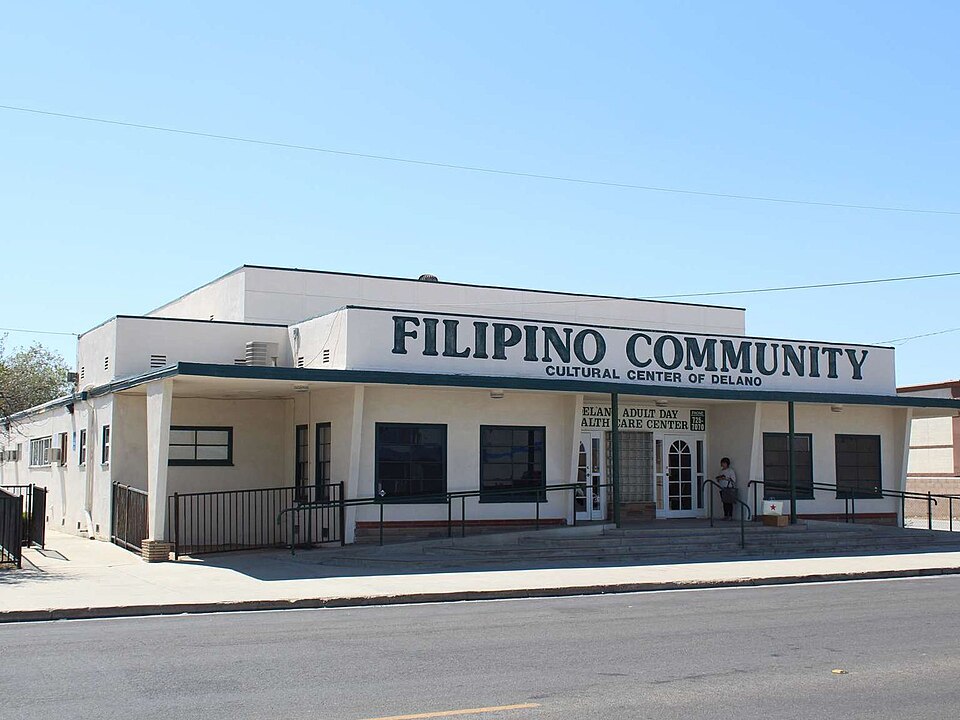
Filipino Community Hall, Delano, California, 2019. NPS photo; public domain.
Image source · Public domain (United States)
My fifth contribution card. Show Larry Itliong and the farm workers. Tell how their work helped people.
Sources for this card
Show what you notice
- Name one Indigenous contribution to California. Name one immigrant contribution.
- Which example shows Indigenous knowledge is still used now?
Answer your waypointact it outtell or dictatewrite