

Session 1, Read and notice: More than a price tag
Week 14 big question: Who helps a useful thing reach us?
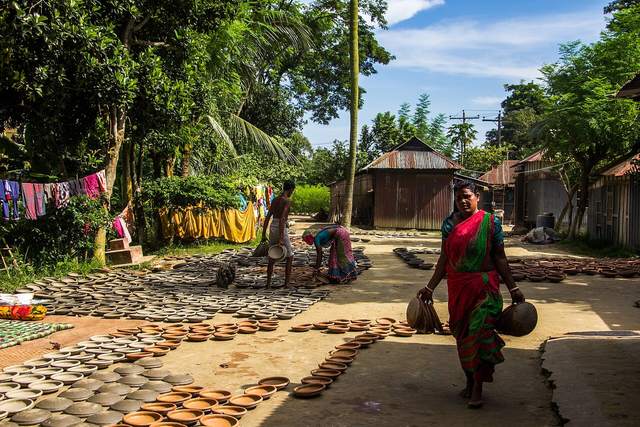
Start with a story (optional) The Doll That Bommakka Made — Read it hereA clay doll tells how Bommakka shaped and painted it, and where it went.
It takes many jobs to bring us one bag.
A maker snips cloth for a bag in this story. Once the maker sews it, a driver takes bags to the market. There, a seller sets them out and helps shoppers find the right size. The bags reach shoppers because these different kinds of work fit together. Someone must make, move and sell the goods along the way. Sometimes one person does more than one of these jobs.
Producers make goods or provide services. Consumers use them.
What happens when someone takes a bag home and uses it? A producer makes a good or gives a service for a consumer to use. The buyer pays for it, while a seller offers it for sale. That seller might be the maker or a shop selling the bag instead. So a seller does not always make the goods they sell. A producer at work can even be a consumer later that day.
Some work at home, like cooking, is not paid.
The buyer pays the agreed amount and gets the bag in return. Money helps people buy goods and services, such as bags and repairs. But look around your home: does every helpful job have a price tag? At home, people cook, clean and care for others, often without pay. Children can help in safe ways with work that helps people live well. Think of a helpful job someone did for you today.
Show what you notice
- Who makes the bag? Who moves it? Who sells it?
- Why does work at home matter, even with no price tag?
Answer your waypointact it outtell or dictatewrite