Story time optional

Picture books you can read together on this site.

From the library

Free with a library card. Availability varies.

The Statue of Libertyby Lucille Recht PennerBorrow in LibbySun Up, Sun Downby Gail GibbonsBorrow in Libby

Standards this week

The same codes and I Can statements as the printed books.

Books by grade

Grade 1

  • 1.3.3I can explain selected American symbols, landmarks and founding documents.
  • 1-ESS1-2I can record and compare daylight at different times of year.

Grade 2

Social Studies

Not in the Grade 2 Social Studies book this week.

Science

Not in the Grade 2 Science book this week.

Grade 1 Social Studies book, p. 82–83
In your book

Session 1, Read and notice: Pictures, places and promises

Week 23 big question: What stories can a symbol tell?

Start with a story (optional) Mei Makes Room for Requests — Read it hereMei asks her neighbors to help fix the path to a shared picnic bench.

A symbol, like a flag, stands for a big idea.

Can a flag tell you a country’s name without a word? It can be a symbol, which stands for an idea. The United States flag has fifty stars for the states. It has thirteen stripes for the first colonies. You can also find a bald eagle on the Great Seal. The Great Seal is the nation’s official mark.

The Statue of Liberty is a sign of being free.

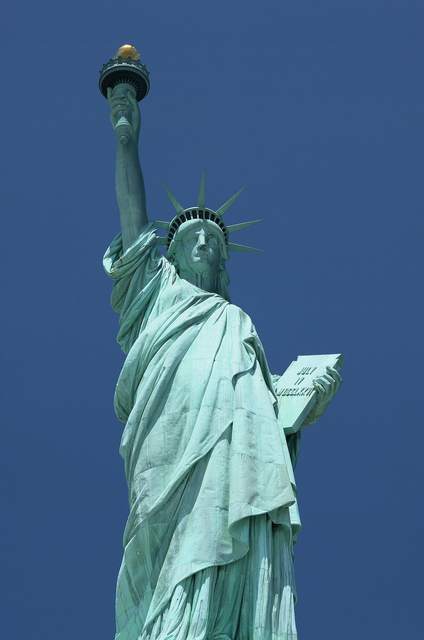
Now picture a tall statue holding a torch above New York Harbor. The Statue of Liberty stands on Liberty Island in that harbor. It was a gift from the people of France. It was dedicated in 1886. Its torch and broken chains stand for liberty, or freedom. Many people also see a welcome to people coming to live here. It is a landmark, or well-known place. But people may disagree about what it means.

The Declaration and the Constitution are not the same.

People wrote plans for their country too, and each had its own job. The Declaration of Independence was adopted in 1776. It said the colonies were breaking away from Great Britain. Then the Constitution, written in 1787, set up the United States government.

The First Amendment lets us speak, gather and ask for change.

But people wanted rules to limit what their government could do. So the First Amendment was added to the Constitution in 1791. It guards speech, religion and the press, and lets people meet in peace. With a petition, people ask leaders to fix a problem, like an unsafe park. Yet enslaved people were not free, and many others had little say. These words mattered, but freedom still was not shared by all.

Sources for this reading
Look and think

Show what you notice

  1. How are the Declaration of Independence and the Constitution different?
  2. What does the Statue of Liberty stand for? How could the First Amendment help people ask for a safer park?

Answer your waypointact it outtell or dictatewrite

Grade 1 Science book, p. 72–74
In your book

Session 2, Investigate: Our changing daylight record

In many places, daylight gets long and then short each year.

Why might bedtime feel different when it is still light outside? In many places, daylight grows longer, then shorter, through the year. We call the time from sunrise to sunset daylight length. Earth’s tilted axis helps cause this pattern. But the change depends on where you live. Places near the equator change less than places far from it. The seasons north and south of the equator come at opposite times. A warm or sunny day cannot tell you how long daylight lasts. Your daylight log records what you saw. Compare real dates, and leave gaps for missing ones. Next time bedtime comes, notice whether it is light or dark.

Set up the test

Gather ongoing daylight log from Week 1 onward · paper strips or drawn bars · drawing tools · adult help with time differences

Safety Never look directly at the Sun. Use saved records and safely observed daylight. Do not search for the Sun in the sky.

  1. Get your daylight log (p. 234). Pick two real dated entries from different times of year, at the same place.
  2. Predict which date had more daylight. Use the same kind of measure for both dates.
  3. With an adult, compare how long daylight lasted. Label the dates, the place and any gaps.Adult: Draw bars to scale only when durations are known. Or compare light and dark at the same time of day.
  4. Tell what your records show. Two dates tell about those two dates, not every day.Adult: Add a new real entry and plan the next check.

Try the model

A model to try after your real test.

Getting the model ready…

Grade 1 Social Studies book, p. 84Grade 1 Science book, p. 75

Session 3: Record and make — A public-place exhibit

Compare · Our changing daylight record

1Date 1 and its daylight
2Date 2 and its daylight

Which had more daylight, and what is missing

Use your real dated entries on the daylight record, p. 234.

Fill this in on your workbook page.

A public-place exhibit

Make an exhibit with two kinds of labels. Some tell what symbols mean, and some show real daylight dates.

  1. Show the flag or the eagle, and the Statue of Liberty. Tell what each one stands for.
  2. Make cards for the Declaration (1776) and the Constitution (1787). Put them in order. Tell each one’s job.
  3. Add your real daylight comparison. Label the place and the dates. If you need more entries, say so.

Connect the ideas. Some labels tell about the past. Some tell what you saw. Why do both need evidence?

Look closely

Tap a picture to make it big. Zoom in and find the clues.

PhotographStatue of Liberty, New York Harbor.Daniel Schwen · Released into the public domain by the author

Field trip

Visit with a grown-up. These open other websites in a new tab.

Sources behind this trip and reading

Grade 1 Social Studies book, p. 85Grade 1 Science book, p. 76

My evidence page: Meanings and measurements

Tell what one symbol means and the jobs of the two documents. Show real daylight dates and what they show. Label any gap honestly.

  • 1A symbol and two documents
  • 2My dated daylight comparison

3Choose and explain · Checkpoint game

Listen, then choose. Finish the game to earn this week’s stamp.

The game needs JavaScript turned on.

For the adult · what each grade shows

Grade 1

Show what a symbol and the Statue of Liberty mean, and compare two real dated daylight records.

Grade 2

Explain the different jobs of the Declaration and the Constitution, in date order.

Showing the Grade 1 line for your book.

Showing the Grade 2 line for your book.

Take a photo of the evidence page or the test. Add your child’s own words. It stays on this device.

Add to my portfolio

Parent corner

How to run this week, in a few minutes.

At a glance

Time

From the workbook: Read and notice about 20 min · Investigate 20–30 min, plus short checks · Record and make 20–30 min.

Core

Tell what a symbol means and how the two documents differ, and compare two real daylight records.

Materials
  • ongoing daylight log from Week 1 onward
  • paper strips or drawn bars
  • drawing tools
  • adult help with time differences
Safety

Never look directly at the Sun. Use saved records and safely observed daylight. Do not search for the Sun in the sky.

Short week

Read paragraphs 1–3, then do the Investigate steps and the evidence page.

Next week

Continue the log toward Week 36. Do not replace missing personal observations with invented dates or presented examples.

Library books

  • The Statue of Liberty by Lucille Recht Penner. A simple history of a well-known national symbol.
  • Sun Up, Sun Down by Gail Gibbons. Follows the Sun's path across a day, matching daylight records.
Answer key (for grown-ups)

Talk together

  1. How are the Declaration of Independence and the Constitution different?
    The Declaration announced separation from Great Britain; the Constitution established the government framework. Use 1776 before 1787 without implying all events happened on signing day.
  2. What does the Statue of Liberty stand for? How could the First Amendment help people ask for a safer park?
    The statue represents liberty. The First Amendment protects speech, peaceful assembly, and petitioning government, helping people raise public concerns such as requesting a safer park.

What to expect in the investigation

Outcomes depend on dates and location. Near the equator, differences may be small; hemispheres have opposite seasonal timing. Cloudiness is not shorter astronomical daylight. Fixed-time light/dark checks provide less precise evidence than sunrise-to-sunset durations. The Northern and Southern Hemispheres have seasons at opposite times. A calendar helps compare observations made at different times of year.

Checkpoint question

Two dated records support comparison across the year. Leave the target pending if records cover only one period.

Kindergarten this weekSocial Studies: California symbolsScience: Compare two shades