
Session 1, Read and notice: Work, play and celebration
Week 26 big question: What can six small clues tell us about past lives?
Start with a story (optional) Paper Play — Read it hereOne sheet of paper becomes a ball, a lollipop and more as children play.
Old clues show parts of everyday life.
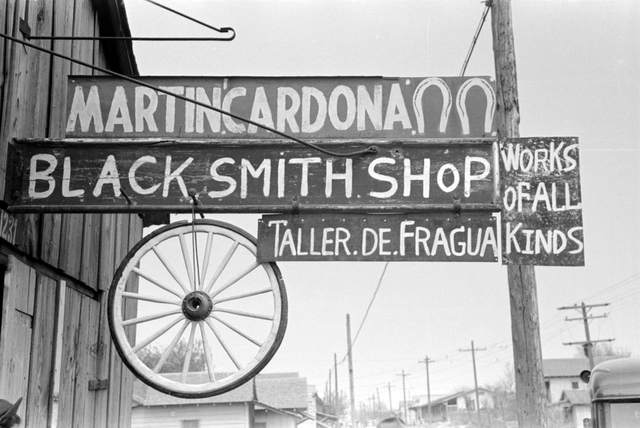
Imagine watching a blacksmith shape a piece of metal for someone. A 1939 photo shows a blacksmith shop in San Antonio, Texas. People still make and fix things, though their tools may differ. Clothes can give us clues about everyday work in the past, too. A museum keeps a woman’s dress from 1900–1905 with an apron for light housework. The dress is an artifact, an object people made or used. It shows one choice of clothes, so we cannot say everyone dressed that way.
A real old book can hold a made-up story.
Could a real old book tell a story that never happened? A 1919 book holds the fable of the hare and the tortoise. The book is real, but its talking animals belong to fiction, a made-up story. Written clues also show us the rules young George Washington copied about manners. They urged people to think before speaking, advice you may still hear today. People may share that goal even when they greet each other differently.
Compare each old clue with today, one at a time.
After school, children in a Kentucky photo from around 1940 play marbles. What do you like to play when your work is done? Games still bring people together, with glass, paper, or pixels. Now think about the holidays that bring people together, too. In 1863, President Lincoln asked the nation to keep a Thanksgiving day in November. Yet people then and now have not all kept the same holidays. Each clue has its own date and place, just like your memories.
Sources for this reading
- Library of Congress · Blacksmith shop, San Antonio — Russell Lee’s March 1939 photograph of the shop.
- Smithsonian · Woman’s Dress, 1900–05 — One preserved dress and apron for light housework, not everybody’s clothing.
- Library of Congress · Washington’s exercise book — The surviving manuscript includes Washington’s copied Rules of Civility.
- Washington Papers · Rules of Civility — Manuscript provenance and rule 73 about thinking before speaking.
- Library of Congress · The Aesop for Children — The 1919 edition is a real historical book containing fictional fables.
- Library of Congress · Children playing marbles — The Kentucky photograph dates to about September 1940.
- National Archives · Lincoln’s Thanksgiving proclamation — Lincoln’s October 3, 1863 proclamation invited a national Thanksgiving day in November.
Show what you notice
- Pick two parts of daily life. What is the same now? What is not?
- An old storybook is a real thing, but its story is fiction. How can the book still be evidence?
Answer your waypointact it outtell or dictatewrite