Story time optional

Picture books you can read together on this site.

From the library

Free with a library card. Availability varies.

Archaeologists Dig for Cluesby Kate DukeBorrow in LibbySwirl by Swirl: Spirals in Natureby Joyce SidmanBorrow in Libby

Standards this week

The same codes and I Can statements as the printed books.

Books by grade

Grade 1

Social Studies

Not in the Grade 1 Social Studies book this week.

  • 1-ESS1-1I can use repeated Sun Moon and star observations to make a prediction.
  • 1-ESS1-2I can record and compare daylight at different times of year.

Grade 2

  • 2.1I can distinguish long ago from the recent past.
  • 2.1.3I can order significant life events on a timeline or storyboard.

Science

Not in the Grade 2 Science book this week.

Grade 2 Social Studies book, p. 119–120
In your book

Session 1, Read and notice: A source is not a whole story

Week 33 big question: How can we tell which part of a story has proof?

Start with a story (optional) Look Again! — Read it hereSupporting match · Putti keeps seeing surprising things, until her big sister says, “Look again!”

A primary source was made then, or by someone who was there.

Picture an old letter next to a new book about it. The letter is a primary source, made then or by someone who was there. An object or photo from that time could be one, too. So could someone’s memory of being there. A secondary source explains evidence, often later. Both kinds can help, but either can be wrong or leave things out. Ask who made each one, when, why, and what it shows.

A rule he wrote down does not prove he kept it.

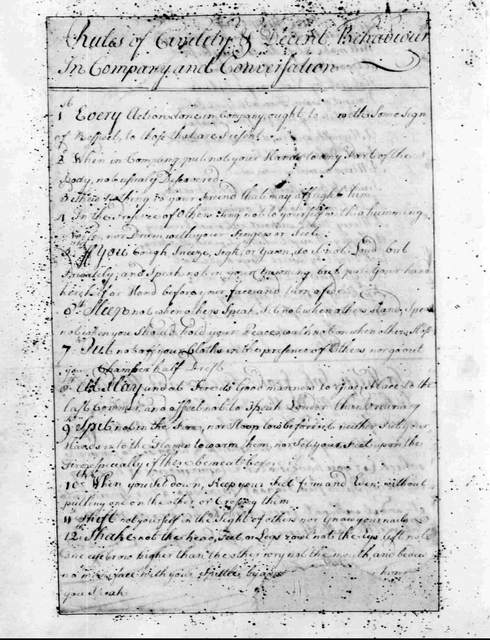
Young George Washington copied rules on how to act in a notebook. One rule he copied said, “Think before you Speak.” Can that rule tell us what he did each day? This primary source shows advice he studied. He did not make up the rules. A secondary source today explains how he wrote them down. Both help us learn what he studied. But neither proves he always followed that advice.

Plans for later go in the future part.

Now picture a line with true events from your own life. Yesterday belongs in the recent past, while a decade means ten years. For a longer stretch of time, a century means one hundred years. A generation is one family step, with no fixed length. Think of a child, a parent, and a grandparent as three steps. Other caregivers can be family, too. Keep plans in a space marked “future,” apart from things you know happened. Which real event will you add first?

Look and think

Show what you notice

  1. Look at the old rule and the new account. What do they both show? What do they not prove?
  2. Where does each go? Is it a real thing from yesterday, or an older thing from your life? Is it a plan for later?

Answer your waypointact it outtell or dictatewrite

Grade 1 Science book, p. 98–100
In your book

Session 2, Investigate: Patterns need more than one look

A pattern helps us make a prediction.

Which side of the sky will glow when dawn comes? As light brightens the east, it gives us a clue for tomorrow. Stars can show changes that happen again, too. A group shifts across a window view during an evening. From such evidence, we make a prediction about what to expect next. Yet clouds or a blocked view can hide a sky pattern. Our Moon record shows full Moons on day 1 and near day 30. Your real daylight log answers a different question. It compares seasons at one place. A week of records cannot show the whole year. What might your next clear view reveal?

Set up the test

Gather sky and daylight records from earlier weeks · paper · calendar · ruler or counters

Safety Never look directly at the Sun. Use horizon light, shaded surroundings, or adult-recorded times. Night observations are optional and require adult supervision from a safe place.

  1. Read the practice records one at a time. Point to each pattern. Predict what comes next.
  2. Draw or tell three predictions: next dawn, next full Moon, next star movement. What could block your view?
  3. Open your real daylight log (p. 234). Compare two real dates from different seasons with counters or a bar.Adult: Check the place, dates, and method first. Skip the comparison if the log has only one season so far.
  4. Label each result practice, seen, or looked up. Mark missing records “not yet.” Never make up records.Adult: Pick dates to collect more.

Try the model

A model to try after your real test.

Getting the model ready…

Grade 1 Science book, p. 101Grade 2 Social Studies book, p. 121 and 123

Session 3: Record and make — The careful curator

Sort · Patterns need more than one look

1Practice records
2My real records

How I can tell them apart

Use your real daylight record, p. 234, and the sky record, p. 235.

Fill this in on your workbook page.

The careful curator

A curator picks what to show. Mark which card is real, which tells about it, and which is made up.

  1. Make three cards: the copied rule, this book’s account of it, and a made-up mouse scene. Label them primary source, secondary source, and fiction.
  2. Make a timeline of three real events in your life. Add past, present, and future. Plans go only in the future part.
  3. Add each sky prediction and your daylight comparison. Show where each one came from.Adult: Then retry one missed North American country or water group with no word list, and check the map.

Connect the ideas. A fun story may go past its evidence. What should we do then?

Look closely

Tap a picture to make it big. Zoom in and find the clues.

Primary source · handwritingRules young George Washington copied, before 1747. “Think before you Speak” is rule 73. Look closely: is it typed or handwritten?George Washington · Public domain

Watch and wonder

Field trip

Visit with a grown-up. These open other websites in a new tab.

Grade 1 Science book, p. 102Grade 2 Social Studies book, p. 122

My evidence page: The source behind my claim

Match a history claim with its source. Match each sky prediction with its pattern. Keep practice data apart from your dated log.

  • 1Claim, source, and limit
  • 2Sky predictions and daylight evidence

3Choose and explain · Checkpoint game

Listen, then choose. Finish the game to earn this week’s stamp.

The game needs JavaScript turned on.

For the adult · what each grade shows

Grade 1

Show which card is a record and which is made up, and one sky prediction with its pattern.

Grade 2

Explain what the copied rule shows and what it does not prove.

Showing the Grade 1 line for your book.

Showing the Grade 2 line for your book.

Take a photo of the evidence page or the test. Add your child’s own words. It stays on this device.

Add to my portfolio

Parent corner

How to run this week, in a few minutes.

At a glance

Time

From the workbook: Read and notice about 20 min · Investigate 20–30 min, plus short checks · Record and make 20–30 min.

Core

Sort a primary source, a secondary source, and fiction, and predict from sky patterns.

Materials
  • sky and daylight records from earlier weeks
  • paper
  • calendar
  • ruler or counters
Safety

Never look directly at the Sun. Use horizon light, shaded surroundings, or adult-recorded times. Night observations are optional and require adult supervision from a safe place.

Short week

Read together, then do Investigate steps 1–2 and Make steps 1–2. If any seasonal daylight evidence is missing, note it as “not yet” for your teacher.

Next week

Preserve original map errors and later corrections to show independent retrieval growth rather than erase the support record.

Library books

  • Archaeologists Dig for Clues by Kate Duke. Shows how digging finds clues, but clues are never the whole story.
  • Swirl by Swirl: Spirals in Nature by Joyce Sidman. Looks at one pattern appearing in many places.
Answer key (for grown-ups)

Talk together

  1. Look at the old rule and the new account. What do they both show? What do they not prove?
    The manuscript excerpt records advice; the modern account explains its copying. Neither establishes constant obedience. Primary does not mean automatically true, complete, or better for every question.
  2. Where does each go? Is it a real thing from yesterday, or an older thing from your life? Is it a plan for later?
    Order actual dates or relative times. Keep future plans distinct from completed events. A historical person’s timeline cannot substitute for the learner’s own personal-event sequence.

What to expect in the investigation

Predict eastern dawn, another full Moon about day 59, and a similar within-evening star shift under comparable viewing conditions. Approximate timing is enough. These are practice-based predictions, not a fabricated observation log. Daylight results depend on location and dates. The full practice records also say evening light faded in the west, the Moon changed shape between full Moons, and the star group crossed side to side on three clear nights. The daylight log answers a different question: how long daylight lasted on real dates. Compare records from different times of year at one place; a week of records is not a year of evidence.

Checkpoint question

Choice B. Ask what additional evidence would be needed to learn about someone’s behavior.

Kindergarten this weekSocial Studies: Days to rememberScience: Help living things